
Meet our namesake!
Amazing creatures at Fin Whale Beach House ...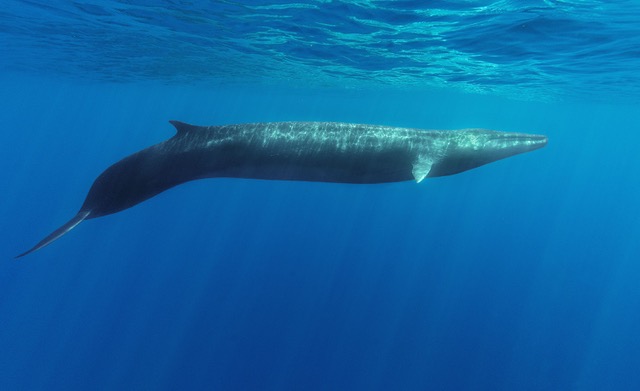
Have you ever wondered about the amazing creature Fin Whale Beach House is named after? Well wonder no more – and meet our amazing namesake… The fin whale is actually the second largest species on earth, after the blue whale. It’s known as the grehound of the sea because of its sleek, slender body and even has the speed to match, being able to keep up with ocean liners.
It belongs to the cetacean order that includes whales, dolphins and porpoises. There are two sub-species of fin whale – the northern and southern fin whales, with those spotted in our waters off the Western Cape belonging to the latter.
Southern fin whales are larger than their northern cousins and can grow up to 27m long, weighing up to 75 tonnes. They are thought to live for up to 100 years. Females usually give birth to a single calf every two to three years after a gestation period of 11 to 12 months.
Fin whales are found all over the world, from polar to tropical waters, but the biggest populations are found in cool, temperate waters where it feeds largely on krill and occasionally on small, schooling pelagic fish.
The fin whale is what’s known as a baleen whale – a filter feeder that has a complex filter feeding system of baleen in its mouth that’s used to filter out small prey such as krill. Baleen is similar to bristles and is made of keratin. It has a fine fringe of hairs attached to it to help filter out food species when the whale opens its mouth, takes in huge amounts of water, expanding its accordion-like throat, and then pushes the water out through the baleen.
Like all other whales on our planet, fin whale populations were decimated by whale hunting during the 20th century. As a result, the fin whale is now endangered, with only around 100,000 left on earth.




Contact Us
+27 (0) 61 523 5041
Visit Us
4 Fin Whale Way, Klein Slangkop, Kommetjie, Cape Town, 7976. South Africa
Message Us...

Proudly associated with…


